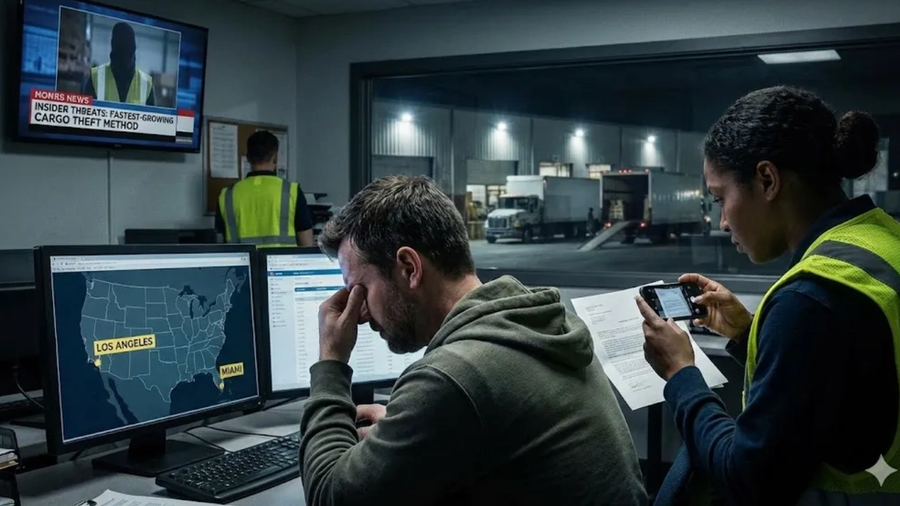
Insider Threats Are Now the Fastest-Growing Cargo Theft Method
Insider participation in cargo theft is surging, exposing a dangerous gap in how brokers verify carriers. A new BSI report reveals why “verified” may no longer mean secure.
By Heesham Naji | January 7, 2026
Insider participation in cargo theft is surging.
Miami. Los Angeles. The two biggest logistics hubs in America are now ground zero for thefts where someone on the inside is feeding information to criminals.
How It’s Happening
- Phishing emails targeting warehouse and logistics employees
- Bribery of workers with access to shipment details
- Corrupt truck drivers coordinating with theft rings
- The “ant method,” stealing small amounts over time to avoid detection
- Sophisticated fraud schemes where criminals pose as legitimate carriers
The BSI report found that 85% of cargo theft cases in Q2 involved tractor-trailers.
Food and beverage led stolen commodities at 23%, followed by agricultural products (15%) and automotive goods (9%).
But here’s what really caught my attention.
Tony Pelli, BSI’s global director of supply chain resilience, said:
"“Check out their FMCSA information. There’s also other third-party services now that can help with the verification of carriers. Even just slowing down a little bit, checking out some of the information, trying to actually call the carrier can help.”
Slowing down isn’t an option when you’ve got a hot load that needs to move in 30 minutes.
And that’s exactly the problem.
The Verification Gap
Most brokers verify carriers at onboarding. They check the MC number, maybe run a CarrierWatch or Highway report, and add them to their approved list.
Then they never check again.
Criminals know this. They buy aged MCs. They spoof phone numbers. They use real carriers’ information to intercept loads. Increasingly, they’re getting help from people inside the supply chain.
By the time something feels off, the freight is already gone — often broken down and resold through underground channels.
What Actually Works
The industry keeps treating carrier verification like a one-time checkbox. It’s not.
Real protection means:
- Verifying at dispatch, not just onboarding
- Biometric verification to confirm the actual driver
- Real-time monitoring for changes to authority or safety scores
- Bank account verification to ensure payments go to legitimate businesses
The “verify once and hope” model is broken.
Criminals have figured it out. It’s time brokers did too.
Source: OverHaul
#cargotheft #strategictheft #cybertheft #cybersecurity #logistics #freightbrokers #trucking #supplychain #fenderr #thebrokerbriefing
Found this useful?
Share it with your network or subscribe for more updates.
Subscribe to Briefing